Showing posts with label Almoradi. Show all posts

Sunday, 29 November 2020

3 Bed 2 Bath Apartment in Orihuela Costa Ref 92426

3 bed 2 bath Apartment in Orihuela Costa Ref 92426 

€ 174,900


Great urbanization of apartments with 2 or 3 bedrooms in a prime location on the Orihuela Costa, just 1 km from Villamartin Golf Course, about 10 minutes’ drive to the beach and the Zenia Boulevard shopping centre, and with bars and restaurants walking distance.
Quality properties, being built around a green area with 2 swimming pools, one of them with spa, jacuzzi and gym, benefit from pre-installed air con and underground parking. There are different options from ground floor apartments with a garden, first and second floor properties with a balcony and fantastic penthouses with a private solarium including a jacuzzi; all them with a modern design boasting a lounge/dining room with sliding doors out to the terrace; open plan and superbly fitted kitchen; 2 or 3 double bedrooms with fitted wardrobes and 2 modern bathrooms. This location is the best, close to Villamartin Golf Course and two more golf courses just around the corner, surrounded by everything you need and good communication to Murcia and Alicante airports. Great opportunity for a low maintenance holiday home.


Monday, 14 August 2017

Utilities in Spain

We are often asked about the utilities in Spain.  If you buy in a town you will almost certainly have mains water but if you have a villa on the edge of or outside the main town you may not have mains sewage but have a septic tank instead.  This surprises a lot of people but in parts of Spain this is normal.  If you buy a rural property you may not have mains water but use a private well or have water delivered by tanker to fill your huge storage tank.
 
Generally mains water is of drinkable quality these days, gone are the days when you had to buy it bottled.  To get around shortages of water there are now a number of desalination plants around the coast taking sea water and cleaning it up for local use.  There are also a number of reservoirs now that are also small hydro-electric plants.  Water supply in the Alicante region doesn’t seem to be a problem anymore.
 
Gas has until recently been bottled only in most areas but towns are slowly having mains gas installed.  Again this surprises many Brits looking to buy in Spain, and of course using bottles of gas for central heating is pretty expensive.  Using portable gas heaters is common practice and fairly economical too.  Modern air conditioning units have settings for cooling or heating and are sufficient for use in a bedroom, although not necessarily that cheap to run.
 
For many years Iberdrola were the only electricity company but in recent years de-regulation has allowed competition and there are now other options.  Also duel tariffs are available too now, so cheap electricity at night and in the morning with a slightly raised rate for the afternoon and evening means savings can be made.  Solar has come a long way too and with 320 days of sunshine a year in south Costa Blanca developers now include solar in their new build homes.
 
There are a few ‘anomalies’ that I have come across over the years.  For instance, where our house is located the water company are also responsible for collecting the rubbish so instead of the cost of rubbish collection being included in the local council tax it is added to your water bill instead!
 
 
      Down load your Free buyers guide from th AIPP
 
Our mailing address is:
www.spanishdreamproperty.com
You can contact us through our web site link below
http://spanishdreamproperty.com/index.php?action=page_display&PageID=2
Subscribe to our News Letter Click the link below
http://spanishdreamproperty.us14.list-manage.com/subscribe?u=7deb539c728e95b92cee9480f&id=59882ad27b
Copyright © 2017 Spanish Dream Property All rights reserved.

Sunday, 13 November 2016

Memories of a young Traveller - Don’t drink the water!

Don’t drink the water!
torriemendo
There was once a (rather bad) sitcom named that.  But in actual fact back in the 60’s and 70’s the tap water in Spain, even in the hotels, wasn’t of drinking quality.  Although none of my family experienced problems we did hear of others who suffered tummy upsets.  Buying water in a bottle was another new experience, the UK didn’t have shelves of bottled water in the supermarkets in those days.  Trying to clean your teeth without swallowing the tap water was another new experience too and one as a 5 year old I remember as being rather tricky.
water
As we didn’t use tap water we didn’t have orange squash either, something all British children drank at that time.  And there was no lemonade, it was orangeade or cola or fizzy lemon.  To a child this was very strange.  And another daily drink missing was fresh milk, so no warm milky drink at bedtime.  Milk came in strange cartons and tasted funny because it was treated so it didn’t have to be refrigerated, (fridges were a luxury item still).  To a child used to full cream milk in bottles delivered by the milkman before breakfast daily it was all a bit odd.  In those days we still had cold milk at school too at morning break time, a third of a pint if I remember correctly.

And there was wine!  Wine was not allowed for 5 year olds but it seemed the Spanish consumed vast amounts and it was very cheap and available everywhere at any time.  In 60’s Britain wine was drunk at a dinner party, bought from a local off licence that could only open for a few restricted hours a day and certainly wasn’t cheap.
wine
And another strange food was olive oil, copious amounts used on the food that was presented.  It tasted odd, sort of nutty and fruity at the same time.  My grandad complained about it being greasy but the food wasn’t greasy.  We had no idea it was healthy and would one day be a mainstay in British cooking too.  Can you imagine certain TV chef’s reactions if they were told they couldn’t use any olive oil – they would have to completely re-write their cookery books!
aipp-banner

Sunday, 30 October 2016

Memories of a young traveller Flying

Memories of a young traveller
airplane-13377
Flying
Spain is a place of happy childhood holidays.  Our first visit was the week following my 5th birthday and Spain was exciting and different, and the beginning of a life-long love.  I’d been on planes before, we flown to Northern Ireland regularly, sometimes twice a year.  Dad had friends and business clients who owned a hotel and an early memory for me was one cold Easter helping clear snow from car windscreens with my older sister while standing on some sort of box so I could reach.  We would have our tea in the kitchen early as we were so young, and got told off for running around the hallways, all the staff knew us.
We toured Ireland too; it was there I first rode a horse, first threw pennies into a wishing well and nearly got washed into the Atlantic by a freak wave.  We always had a holiday somewhere in England as well but my Mum longed for warm sunshine and package holidays to Spain had just begun, so Spain it was.
When flying to Ireland as a toddler I have a clear memory of worrying about the propellers spinning off and Dad reassuring me they couldn’t.  So my first memory of seeing a plane with jet engines is wondering where the propellers had gone!  No propellers was very worrying!
I wasn’t a ‘good traveller’, in fact I’m still not, plagued by motion sickness and ear problems all my life, flying can be a painful and unpleasant experience, but planes get me from A to B quickly and boats just make me feel ill for longer!  My parents and fellow travellers must have been very patient with me.
Spain in the 60’s didn’t have high rise buildings, air conditioning, kiss me quick hats, larger louts, fish and chips or pubs.  What it did have was terrible roads, strange food, lots of donkeys in hats pulling carts along dusty tracks, hot sunshine, warm sea and wonderfully friendly people.  We seemed a very long way from England or Ireland that first visit – to me, a little 5 year old, we had entered a whole new world.
aipp-banner


Sunday, 14 August 2016

Our Spanish Dream Part 51 Torrevieja

The town of Torrevieja is a short drive from our house. The small city dates back to 1802 and is named after the old watch tower (Torre = tower and Vieja = old). Large cities with high rise are not my kind of place but to my surprise I find I like many parts of this particular city.
torr2
The buildings are, in the main, not that tall. In fact smaller than other large tourist towns I know well in the northern Costa Blanca such as Calpe, Denia, Javea and of course, Benidorm (which I don’t know well as one visit was enough!). The place is truly international with influences from as far apart as Italy and the Caribbean, with one of the most diverse populations in Spain. In 2014 the population is recorded as around 108,000, of which around half are Spanish and the rest a wide mix from across the globe. Native English speakers make up about 11%-12% of the total population, which is pretty much in line with the overall percentage in Spain in most coastal areas, but lower than some other coastal towns. To give you some idea of how the town has expanded the current population is around four times larger than in 1990 and twice that of 2000.
The town’s blue flag beaches, long promenade, fishing port, yacht club and harbour make up the sea front. Much of the tourist area of town has undergone an up-date with new pedestrianised areas, new theatre, new out of town concert venue, new tourist information office and much more. The narrow streets are packed with individual shops and bars run by the Spanish, not ex-pats, with residential apartments above, many to only five storeys. The town has somehow maintained its identity whilst catering for international visitors which swell its number to 500,000 in high season.
Perhaps one of our favourite pass-times when we go to Torrevieja is to visit Valors and enjoy their chocolate y churros, on the opposite side of the road to the square by the church of the Inmaculata Conception. The original church, like much of the town, was destroyed by a major earthquake in 1829 and the current church was built in 1844 using the stones from the original watch tower (Torre) in the foundations. If you have children then the fun fair and Park of Nations are a must. Or if you prefer more cultural surroundings then have a coffee in the Casino (which is not a casino but a restaurant and art gallery and social centre). If you are there for the right week in August then you can experience the Habaneras Festival which has been run annually in the city for over 40 years. This is a music festival and competition where the music is a fusion of Cuban and Spanish.
cassinot
Torrevieja grew from the salt industry, still a major employer, producing half a million tons of salt a year. There are two lakes, Laguna Salada de la Mata and Laguna Salada de Torrevieja, but they are more commonly known as the blue lake and the pink lake. The Parque National surrounds the blue (La Mata) lake while the pink lake is a hive of industry on one side. The lakes, together with the Mar Menor to the south and the Santa Pola salt lakes to the north, create a unique micro climate, one the World Health Organisation lists as one of the healthiest in the world; particularly good for those who suffer with joint or respiratory problems. Combined with the warm average winter temperatures (higher than the Costa del Sol and several degrees warmer than north Costa Blanca) of over 10 degrees (usually upper teens in the daytime), 320 days of sunshine and frost being virtually unheard of, you cannot better the climate in Europe.


http://www.aipp.org.uk/members/spanish-dream-property-beverley-townsend/2

Sunday, 7 August 2016

Our Spanish Dream Part 50 Cranes of Hope

Cranes of Hope

We’ve all heard of the Costa Del Sol, The Costa Blanca and the Costa Verde but how many have heard of the Orihuela Costa?  Well it’s not a Costa in the way we Brits picture them, it’s just 16km of coast in the very south of the Costa Blanca, Alicante region.  Forty years ago it was farmland and coastal scrub land, now it’s a large town divided into several separate areas; Campoamor, Cabo Roig, La Zenia, Playa Flamenca, Los Altos, Villamartin, Las Ramblas and part (not all) of Punta Prima.  Although often wrongly classified as part of Torrevieja, the area actually comes under the control of the townhall in the city of Orihuela, some 30km away, hence the name.  Popular with ex-pats from across northern Europe it has diverse population.
City of Orihuela
or1.JPG
or2.JPG
or3.JPG
or4.JPG
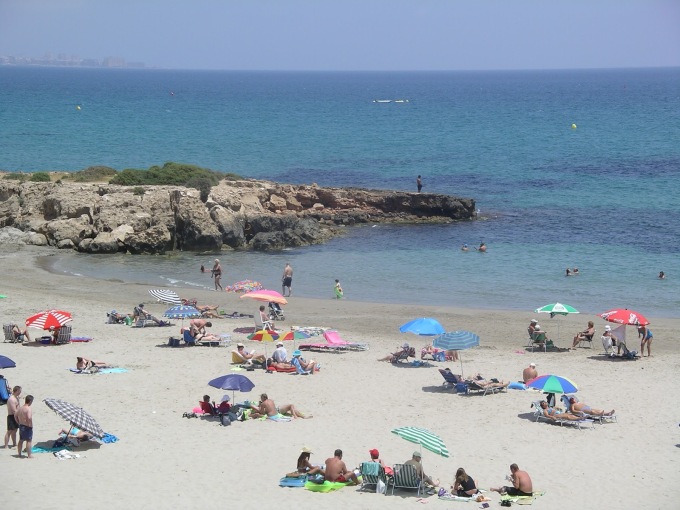
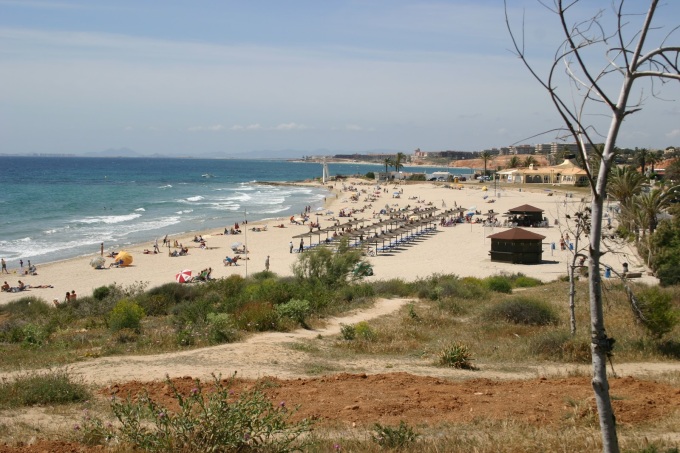
An all year round destination for holiday makers, thanks to the milder winters, blue flag beaches and the famous golf courses of Villamartin, Campoamor, Las Ramblas and the newest addition, Las Colinas.  A lack of hotels means most holiday makers rent private apartments and villas, maybe one of the reasons A Place in the Sun magazine named it in their recent Top Ten of places to buy a holiday rental property, although even they mistakenly stated places such as La Zenia and Cabo Roig as being part of Torrevieja!
Beach1
beach2.JPG
Cabo Roig Beach.jpg
CampoamorBeach.jpg
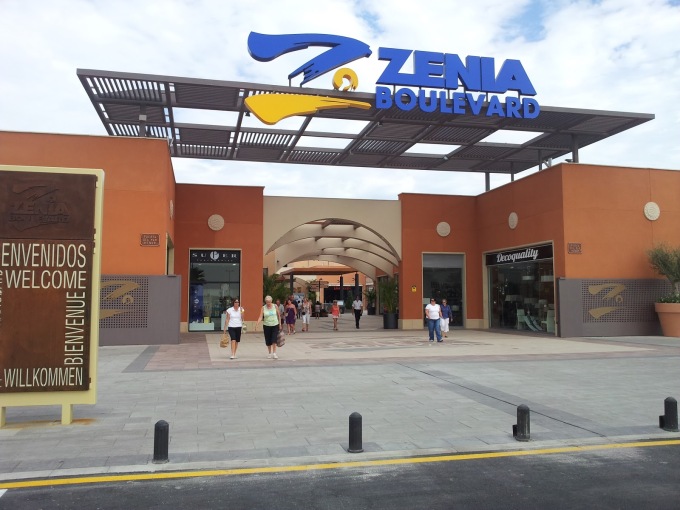
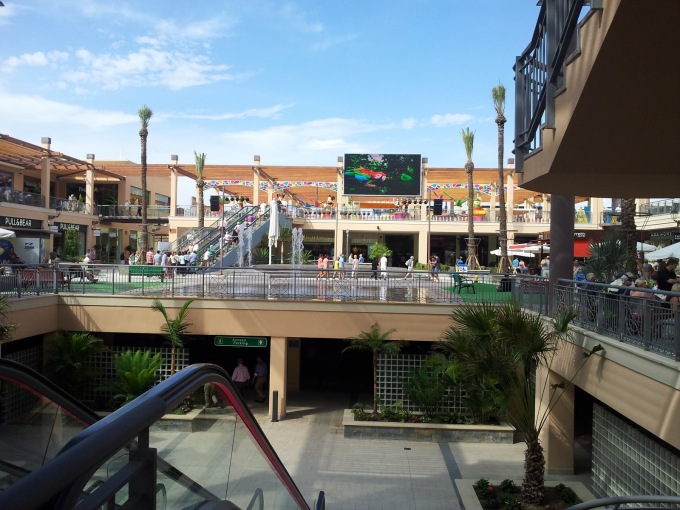
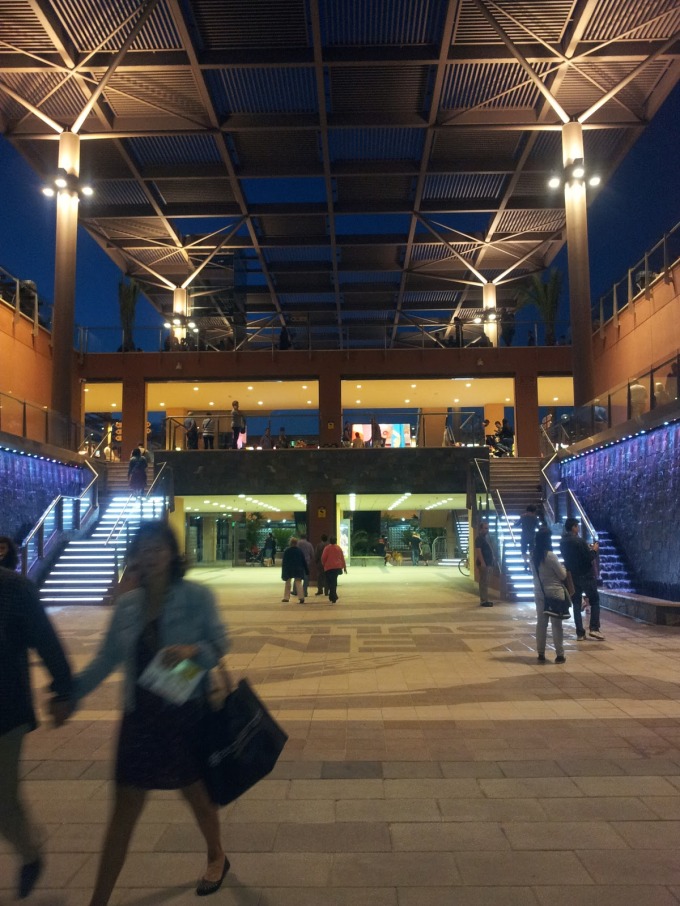
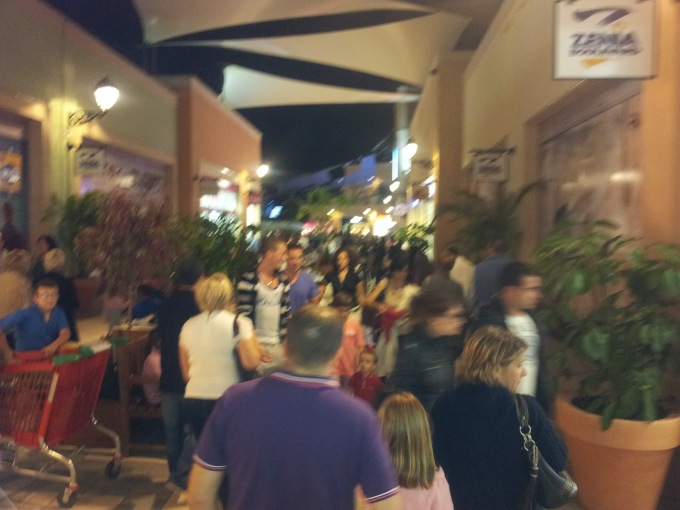
And now Orihuela Costa boasts the largest shopping mall on the Costas!  Opening last October with 150 shops and bars, sporting some of the best known names on the high streets of Europe, plus a bowling alley, casino, ‘town square’ complete with dancing fountains, free parking and sea views, La Zenia Boulevard is a shopper’s paradise.  And it’s always busy.  Spain may be deep in recession but people still go shopping!
lz1.jpg
lz2.jpg
lz3.jpg
lz4
Forever reading in the British press about the unsold new properties littering the coastal resorts and how nothing is being built, this area is genuinely ‘bucking the trend’.  At any one time there are half a dozen cranes to be seen on the skyline building new low-rise apartments and houses, which are selling.  There is nowhere near the flurry of activity that could be seen a decade ago, but there is building work, a rare sight in Spain these days.

http://www.aipp.org.uk/members/spanish-dream-property-beverley-townsend/2

Sunday, 24 July 2016

The Ten best things about the Orihuela Costa 3

Our Spanish Dream Bull Running part 49

br1
 Bull Running

I hesitated about adding this one, it is a controversial subject, although not as inflammatory as bull fighting.  Whilst Pampolma is by far the most famous, and possibly also the largest and most dangerous to both man and beast of the bull running festivals, there are thousands of towns and villages across Spain that have their own annual events.  I attended one in Benitachell some years ago from sheer curiosity.
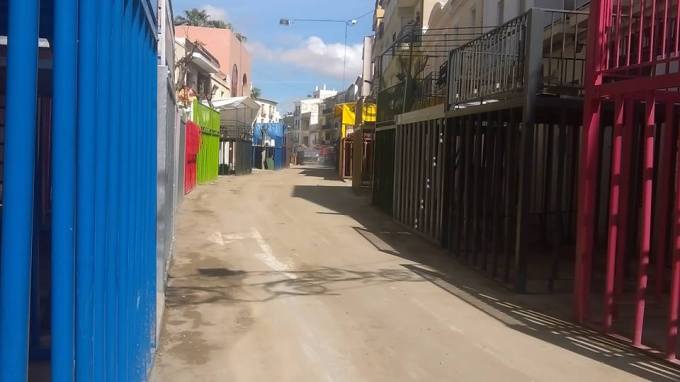
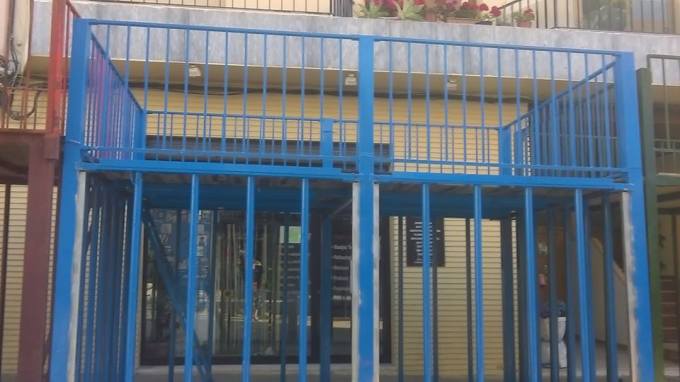
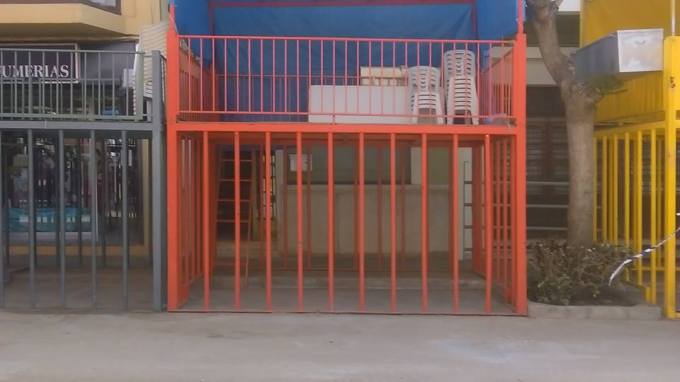
Part of the town is shut off to cars and strong cages set down both sides of the street.  The cages are for people, not the bulls!  Some are two storey with seating areas on the roof of the cage.  These seats are usually reserved by a local business or groups.  In some villages the ‘cages’ are built fresh each year from local tree felling instead.  We witnessed a case in an inland village a few years ago where tree trucks were set upright into the pavement each year instead of cages – that year one was placed outside the bank, the doors of which opened outwards so the tree trunk prevented the door from opening.  Instead of moving the trunk the bank manager opted to keep the bank shut for the whole week so the bull running fiesta could proceed unhindered!
br2
The foolhardy or brave, depending on your perspective, gather at one end of the town whilst the young bulls are in a large pen.  Once the men start running the bulls are ushered out of the pen to chase the men.  The idea is, of course, to get to the end of the course before a bull gets you!  Along the way people cheer the runners on from the safety of the cages.  The gaps between the bars of each cage are wide enough for a person to slip between for safety when a bull gets too close for comfort, but not for a bull.  Except one very enterprising youngster during the Benitachell run which somehow managed to get his head and horns through by turning his head sideways, then straightened his head and tried to pull his now stuck head back out – the bull shock the cage so hard the people on the top couldn’t get off quick enough as the cage below rapidly emptied!  Encountering an angry bull that close up is not an experience I wish to repeat in a hurry!
br3
Generally these small village events end with no injuries to either man or bull and are generally not opposed even by the anti-bullfighting lobby.  However 2015 was quite different as several fatalities were reported during the larger events (including Pamploma), bringing the matter very much into the news.  It may be a nightly event for a whole week in the town.  Whether ex-pats actively oppose these events as animal cruelty or accept it as a cultural activity is a very personal choice and one on which I do not wish to comment here.  Having experienced an event of this nature I personally would NOT choose to go again.

Wednesday, 1 June 2016

Property Of the Day

Property Of the Day

Dave & Bev welcome you to Spanish Dream Property

Where Your Dream Matters


Ref: HEQ0027
Type: Villa / Detached
Area: Costa Blanca South
Town: Benijofar
Beds: 4
Baths: 2
Pool: Yes
Price: €210,000
Description: This four bedroom detached Villa situated in a popular area of Benijofar, occupies a spacious plot boasting: off-road parking, covered dining area, swimming pool, private seating areas, sun terraces, plus an abundance of outdoor living space.
Direct link to Property
#wabas 
#spanishdreamproperty
#costablanca
#Spain
#spanishdp

Ten Best Things About The Orihuela Costa 1

Wednesday, 11 May 2016

Property Of The Day


Ref: HEKP7260

Type: Penthouse
Area: Costa Blanca South
Town: Punta Prima


Beds: 2

Baths: 2
Pool: Yes
Price: €446,000

Brand new front line 2 bedroom, 2 bathroom penthouse apartments. From all the properties there will be panoramic views to the sea and the beach

#wabas 
#spanishdreamproperty
#costablanca
#Spain


Monday, 9 May 2016

Our Spanish Dream Driving in Spain and hiring a car part 47


Our Spanish Dream Driving in Spain and hiring a car part 47


Driving in Spain and hiring a car
edi
This brings us to the general subject of car hire in Spain.  These days we only use a car hired from a family run business in Alicante, but they will also bring a car to Murcia airport.  No hidden extras, your quote is what you pay, and no long wait at the airport to fill out forms.www.edirentacar.com have looked after our needs for many years now.
The big car hire companies are well known for adding ‘extras’ to your bill.  You arrive at the airport, queue for 40 minutes with 3 bored children, desperate for a decent cuppa and weary from the hours of travel.  When you finally get to the desk you have to confirm all the information already supplied, then you get offered an ‘up-grade’ and you say no.  They make the up-grade sound more attractive and you feel awkward still saying no.  Then they say there is extra insurance cover required for the windscreen and tyres, or whatever, but there is always an extra.  And don’t forget the charge for the child seats required by Spanish law.  And they want your credit card details for the deposit.
Then you pay for a full tank of fuel, being told to return the car with an empty tank.  Everyone knows that there is no way you will risk running out of fuel on the way back to the airport so every car is returned with some fuel in the tank, so why should you pay for a whole tank?  If you are only visiting for short time, or only doing local trips to the shops and beach, you probably won’t use a whole tank of fuel.  However if you do need to refill the tank the chances are you will find the same value in fuel for which you were charged at the airport won’t actually all fit into the tank!
The targeting of hire cars is the subject matter of several newspaper articles each year, both by the criminals and the traffic police.  You are advertising by the un-removable sticker on the car that you are probably on your holiday, so relaxed about personal security and unsure of the Spanish road laws, making you an easy target.  Removing the sticker will mean damaging the paintwork and therefore being ‘fined’ for damaging the car by the hire car company.  The rules are simple: never leave valuables on display, no matter what the temperature shut all windows and lock the car when not in it, drive according to road conditions and within speed limits, wear your seat belt, carry your documents (if you can, also keep a photocopy back at your accommodation), the driver must carry his/her passport, spare glasses and wear sensible footwear for driving.  After collecting your car from the airport drive straight to your accommodation and don’t at any time leave all your cases and belongings unattended in the car if you have to stop en route for refreshments.
Best advice, use local, small, recommended businesses rather than the big companies.  If you become a regular customer they will look after you.
256x256 - Copy (101)
www.spanishdreamproperty.co.uk